Introduction
Local government has a central role in improving population health and tackling inequalities. As part of the Government’s 10-year health plan, councils, working in partnership with local systems, are critical to delivering prevention and improving outcomes for communities. The 10-year Health Plan states that every council in England will have a public health peer review.
The Department for Health and Social Care (DHSC) is funding a peer review and improvement support offer 2026 - 2029 being delivered by the Local Government Association (LGA) and known as the Public Health Improvement Programme. This will run from 1 June 2026 to 31 March 2029. Each peer review will be followed by a report, and an improvement plan, supported by the Regional Directors of Public Health.
This prospectus outlines the 2026 – 29 improvement support offer to councils, and opportunities to engage with the Programme.
Programme overview
The programme involves a range of support:
- Universal support, available to all councils
- Targeted support to councils, based on specific council need
- Call-off support, based on sector or specific council need
- Public Health Peer reviews and improvement planning
Ninety public health peer reviews will be delivered over the next three years: 20 peer reviews in 2026/27, with this number increasing to 35 for the two subsequent years.
Where a peer review identifies specific challenges and areas for improvement, councils could access targeted support to help turn recommendations into practical and sustained improvement. It will be tailored but could draw on existing co-developed support offers provided by the LGA.
The universal support offer will include a broad range of frameworks, shared learning, case studies, workshops and development opportunities to support continuous improvement. Universal support can be accessed via our webpages, and details on events communicated through LGA bulletins direct to councils.
Approach
The Programme is built on the LGA’s proven sector-led improvement (SLI) approach, rooted in collaboration, shared accountability, and peer support.
The programme is grounded in principles that councils recognise and trust:
- Sector-led, not inspection-led – focused on improvement, not performance management
- Peer-based support – delivered by experienced peers including Chief Executives, Directors of Public Health, elected members
- Collaborative and tailored – shaped around local context, needs and priorities
- System-focused – recognising the council’s leadership role within wider place-based partnerships
This approach enables honest reflection, constructive challenge and practical learning, helping councils continuously improve and achieve their ambitions for public health.
All improvement support is co-developed with councils, evaluated and reviewed on a regular basis.
Support offer
1. Public Health Peer Reviews
The offer is centred around peer reviews designed to help councils identify, diagnose and tackle problems in delivering their role; support in effectiveness in improving population health and reducing health inequalities; recognising the diversity of local contexts, pressures and ambitions across England. DHSC ministers expect all councils to participate, with 90 peer review planned from 1 June 2026 to 31 March 2029
The purpose of the Public Health Peer Reviews is to review ‘to what degree the council is fulfilling its public health responsibilities’. It involves a small team of peers giving up their time to spend time in another council to provide challenge, highlight successes and share learning with the peers having the role of 'critical friends' and 'trusted advisers'.
Each review is tailored to the council’s local context but follows a consistent, robust methodology to ensure credibility and value.
It is not:
- an inspection
- performance management
- a focus only on the Director of Public Health, the public health team – but will consider the contribution made by them
The process involves a wide range of people, and the findings are delivered immediately.
Peer reviews support and contribute to the improvement of local government as a whole by sharing good practice and innovative ideas.
Peer review scope and Key Lines of Inquiry (KLOEs)
Engagement with the sector has informed the development of the public health peer review scope and KLOEs. This has been undertaken through a combination of methods including attendance at ADPH regional network meetings, conferences, professional events. focus groups and targeted stakeholder discussions. Over 400 people have played a part in the consultation process.
The consultation process has ensured that the content of public health peer reviews will reflect:
- National policy, legislation and priorities
- Local authority public health responsibilities, including statutory duties of the DPH
- A whole-council approach to improving population health and public health outcomes
- Key system challenges including organisational, system & geographical changes, prevention, inequalities and health protection
Peer review themes following consultation will be tested during to pilot peer reviews:
- Leadership and Governance
- Vision and Priorities
- Partnership Working
- Data, Intelligence and Outcomes
- Resources, Quality and Commissioning
- Statutory Responsibilities
The process
The peer review process begins well before the on-site visit, with a period of preparation that helps ensure the review is focused and meaningful. This includes:
- A scoping conversation to agree priorities and areas of focus
- A self-assessment completed by the council
- Review of key local strategies, plans and governance arrangements
- Drawing upon data and insights
The on-site phase, which is typically three days, brings together a wide range of stakeholders through interviews, focus groups and discussions.
The outputs and next steps
At the end of the visit, councils receive immediate verbal feedback, followed by a detailed written report agreed with the council within four weeks of the review highlighting:
- Strengths and successes
- Areas for improvement
- Clear, actionable recommendations
Following the public health peer review councils publish their report and are supported to develop an improvement plan within three months. The improvement plan translates the review findings into clear, time-bound actions.
Councils can access ongoing improvement support to address specific challenges identified through the review through the Public Health Improvement Programme and be supported by DHSC Regional Directors of Public Health who will:
- Have sight of the peer review report
- Review peer review reports findings relevant to their region and contribute to the development of improvement plans
- Monitor progress against agreed improvement plans as part of existing assurance processes and providing support where feasible, subject to capacity
FAQs for the peer reviews can be found here.
2. Universal support
Under universal support, the Programme provides a broader suite of tools, workshops and development opportunities to support continuous improvement. This includes but is not limited to:
- The Public Health Learning Exchange for shared learning, discussion forums
- Webpages with access to the full range of support on offer include toolkits, frameworks, manuals, blogs, case studies
- Peer training to enable peers to be equipped to support with the full range of our offer, predominantly the peer reviews
- Health in All Policies
- Framework
- Councillors Guide
- National Network for Public Health Consultants and other senior
- Webinars and Lunch and Learn sessions to enable access to the latest policy information, and to share learning from across the sector
- Support around Local Government Reorganisation and Devolution
- Information on Health and Wellbeing boards including
- What works for Health and Wellbeing boards
- HWB Maturity matrix
- Case studies
- Information around neighbourhoods
- Annual Public Health Conference
- Online Public Health Strengths and Risks Self-assessment, information on this below. It is universally accessible, with opportunity to explore bespoke support to build on actions following undertaking the tool.
- ADPH what good looks like
Universal support can be accessed via our webpages, and details on events are communicated via LGA bulletins.
Public Health Strengths and Risks Self-Assessment
The Public Health Strengths and Risks Self-Assessment can be used flexibly by Directors of Public Health (DPH) to understand strengths and areas for improvement.
It consists of seven domains with the purpose of the tool to provide an opportunity for structured reflection on:
- Strengths and opportunities
- Challenges and areas for improvement
- Identify mitigating action to address issues/potential areas of risk in relation to public health
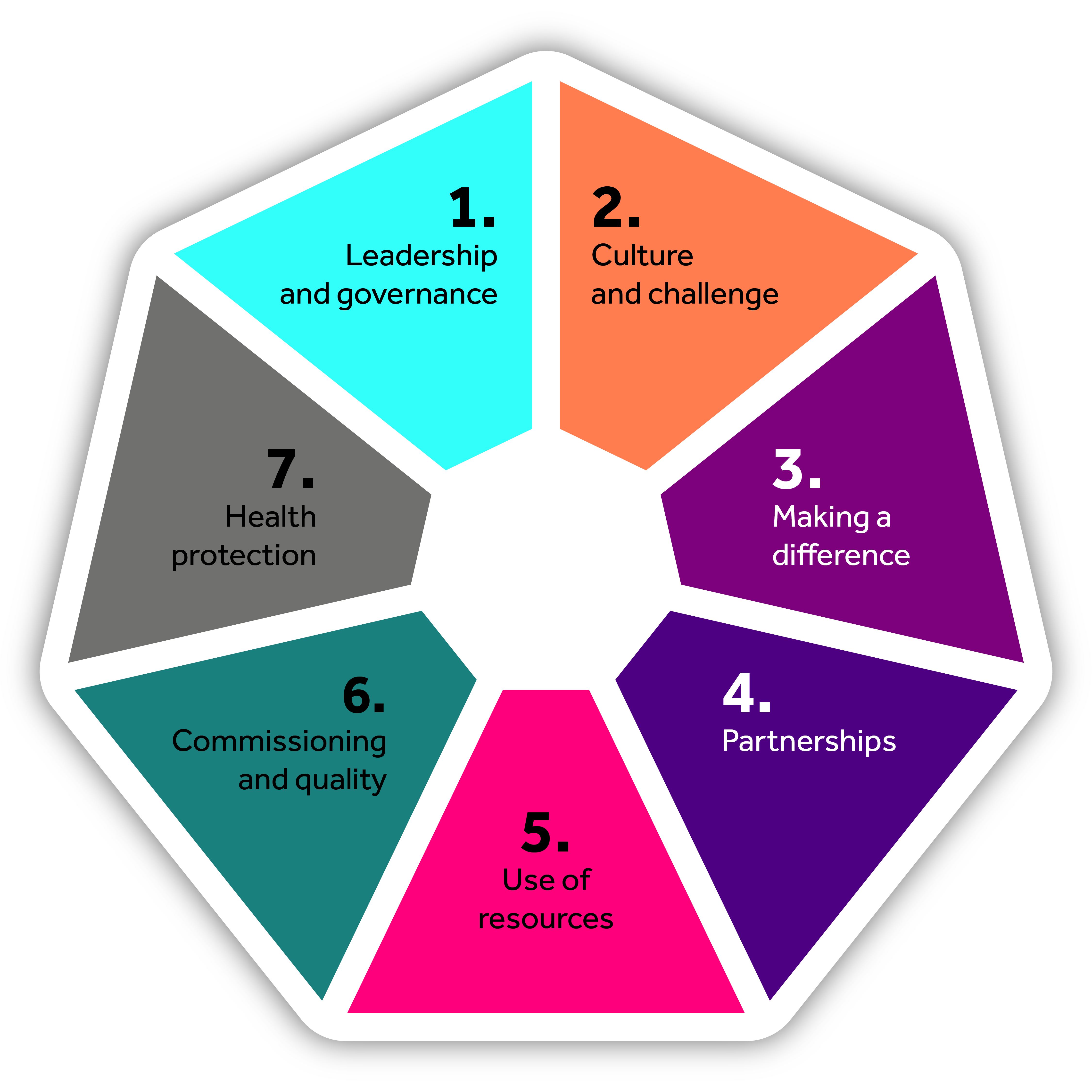
Features and benefits include:
- Owned by the Director of Public Health
- Used flexibly e.g. how deep the DPH wants to go for each domain
- Stimulate thinking; highlight strengths and successes as well as issues/risks
- Data in and data/information out controlled by DPH
- Team building exercise and opportunity to reflect
- Provides a common framework/language between other councils
- Opportunities for peer-to-peer work
- Aggregated data can help to:
- bring focus to discussions at network/regional/national level
- focus improvement activities (including regional SLI Plans)
- demonstrate trends over time
- provide a basis for comparative information
The self assessment is accessed by requesting a link from [email protected] and can be completed online by the Director of Public Health and/or their team. An analysis is undertaken by the Public Health Improvement Programme Team’s Data Analysts and sent to the Director of Public Health. A workshop for the DPH and their team facilitated by one of the LGA’s trained contractors, a former DPH, can be provided to provide support and challenge to agree improvement actions.
Undertaking the Public Health Strengths and Risks Self Assessment could provide useful and relevant information to feed into public health peer review processes.
Call off
The Programme will provide a ‘call-off’ facility for improvement support for priority public health issues or topics, as agreed with DHSC and the Regional Public Health Teams to support councils on urgent issues, including but not limited to, those related to the Local Outcomes Framework or new policy priorities.
3. Targeted support
Where a peer review identifies specific challenges or opportunities for development, councils can access targeted support to help turn recommendations into practical and sustained improvement. The support could be scoped and tailored to a specific improvement area or come from a range of existing support offers, see below.
Health in All Policies
Health in all policies (HiAP) is a practical approach that helps improve people’s health and health equity by making health and wellbeing part of everyday decision-making. It is based on a simple, evidence-based, concept: that the conditions we’re born into, grow, live, work and age in, and our access to power, money and resources, shape our physical and mental health and wellbeing, and have a powerful influence on health inequities.
The support will be tailored to each council’s context and can include a desktop review and one to one conversations across the council to build a picture of the opportunities and challenges which is then explored in a facilitated workshop. Workshops focus on action planning based on the degree to which HiAP is, and can be, adopted in designing and improving frontline services, organisational development, priority setting and place and system level planning.
HiAP is considered more important than ever to pursue health equity and social justice, not just population health. The increase in councils adopting Marmot principles is testament to this (see Building fairer towns, cities and regions: Insights from Marmot Places) and more councils have become part of the World Health Organisation’s Healthy Cities movement.
There is also a range of materials, co-developed with councils, and regularly refreshed to reflect changes to the context in which councils are working. Visit the HIAP website for:
- HIAP manual
- Case studies
- Councillor’s guide
Prevention Matters Training
Complementing the HIAP approach Prevention Matters Training is designed to support elected members to be champions for public health and contribute to improving the health of their communities. Through an interactive workshop, participants are supported to:
- Understand their roles in championing public health, prevention and tackling health inequalities/health improvement
- Explore determinants of health and wellbeing and the factors that can lead to health inequalities as well as the policies looking to address health inequity
- ‘Myth bust’ the role of NHS and local government in relation to public health & prevention (including language & resources)
- Explore health and wellbeing, locally and nationally, and the role of council services in addressing the wider determinants of health
- Provide the context for the council at system, place and neighbourhood levels including geographical changes, levers, opportunities and challenges
The training is tailored to suit local context, needs and priorities.
Political awareness training sessions
These sessions are designed to support public health teams in building political awareness and developing confidence when working with elected members. By strengthening understanding of the political environment, participants will be better equipped to navigate decision-making processes and foster productive relationships.
The sessions will:
- Enhance understanding of the local political landscape, including how the council operates at a strategic level and how decisions are made
- Support more effective working relationships between officers and elected members
- Improve communication and engagement with councillors
- Provide practical examples and scenarios to strengthen day-to-day working practices
Local Government Reorganisation and Devolution
The LGA is currently developing its offer to Councils around LGR and Devolution from a Public Health lens. Information is currently available and can be found in the Universal Support section of the prospectus. If you would be interested in discussing opportunities for support in relation to LGR and Devolution, please contact [email protected].
Bespoke/tailored support
The support on offer is not limited to the above. Should a council wish to explore a more bespoke support, please contact [email protected].
Get involved
Becoming a peer reviewer
Peers are at the heart of peer reviews which are managed and delivered by the sector for the sector and provide a ‘critical friend’ and ‘trusted adviser’ perspective. A peer team consists of people with the relevant experience and knowledge. A peer is:
- A team player
- Able to ‘hold the mirror up’ to identify strengths and areas for improvement
- Able to provide constructive support & challenge
- Able to analyse and understand large volumes of information and data
- Displays professional curiosity
- Aware of political, structural, geographical context and changes
Why become a peer?
- Contribute to improving public health outcomes beyond your own organisation
- Develop your leadership, analytical and facilitation skills
- Gain insight into different approaches, systems and models of delivery
- Build networks across local government and the wider public health community
The experiences we are particularly looking for to join our pool of peers are:
- Officers including Chief Executives, Directors of Public Health, Public Health consultants
- Elected members, particularly those with a portfolio/executive responsibility that includes public health
- System partners with relevant experience relating to public health
- People from Voluntary, Community, and Social Enterprise (VCSE)
As a peer reviewer, you will work as part of a small team to support councils through peer reviews and other improvement activity. Peer reviewers are fully supported by the LGA, including training, briefing and ongoing development, ensuring consistency of approach and high standards of delivery.
Each peer review ensures that peers’ skills and experience align with the needs of the council that has requested the peer review.
Participation is flexible and designed to fit around existing roles, with opportunities to contribute to peer reviews and wider Programme activity.
Contact
For further information about all of the above, or to get in touch to discuss more about the offer, please contact [email protected].
Information is also shared via the LGA Community Wellbeing bulletin which is sent monthly you can sign up here: E-bulletins.