St Helens Borough Council, through the Inequalities Commission, convened a multi-agency workshop to address rising levels of rough sleeping.
Synopsis
St Helens Borough Council, through the Inequalities Commission, convened a multi-agency workshop to address rising levels of rough sleeping. The workshop brought together partners and local authority services to develop a shared understanding of the drivers of rough sleeping and identify practical actions. Informed by local data, lived experience, research evidence and best practice, participants jointly developed recommendations around prevention, integrated person-centred support, workforce capability, accommodation pathways, commissioning and system navigation. These recommendations are now being used by the Communities Department within the Place Services directorate to inform the development of the council’s Homelessness strategy.
Background
Councils have statutory duties under the Housing Act 1996, Care Act 2014 and Homelessness Reduction Act 2017 to assess and support people at risk of, or experiencing, homelessness. This requires housing, health and social care services to work together to prevent rough sleeping and provide appropriate support.
Nationally, rough sleeping is now at its highest level since records began under the current snapshot approach. In autumn 2025, 4,793 people were estimated to be sleeping rough on a single night in England, an increase of 3 per cent from 2024 and 171 per cent higher than in 2010. The rate of people sleeping rough increased from 8.0 per 100,000 population in 2024 to 8.2 per 100,000 in 2025, although it remains below the 2017 peak of 8.5 per 100,000. The North West recorded the largest regional increase between 2024 and 2025, rising by 20 per cent. (MHCLG, 2026)
St Helens has also experienced a rising trend in the number of people rough sleeping, underscoring an urgent need to respond.
St Helens’ current response includes proactive daily outreach, multiple referral routes, including from prisons, hospitals and frontline services, and emergency accommodation through council-commissioned supported accommodation. Multi-agency forums such as the Complex Cares Panel and the multi-agency ‘Huddle’ group provide coordinated support for individuals with multiple and complex needs. However, persistent challenges remain, which is why a workshop was convened to bring stakeholders together to understand the problem and generate collective recommendations for action.
What we did
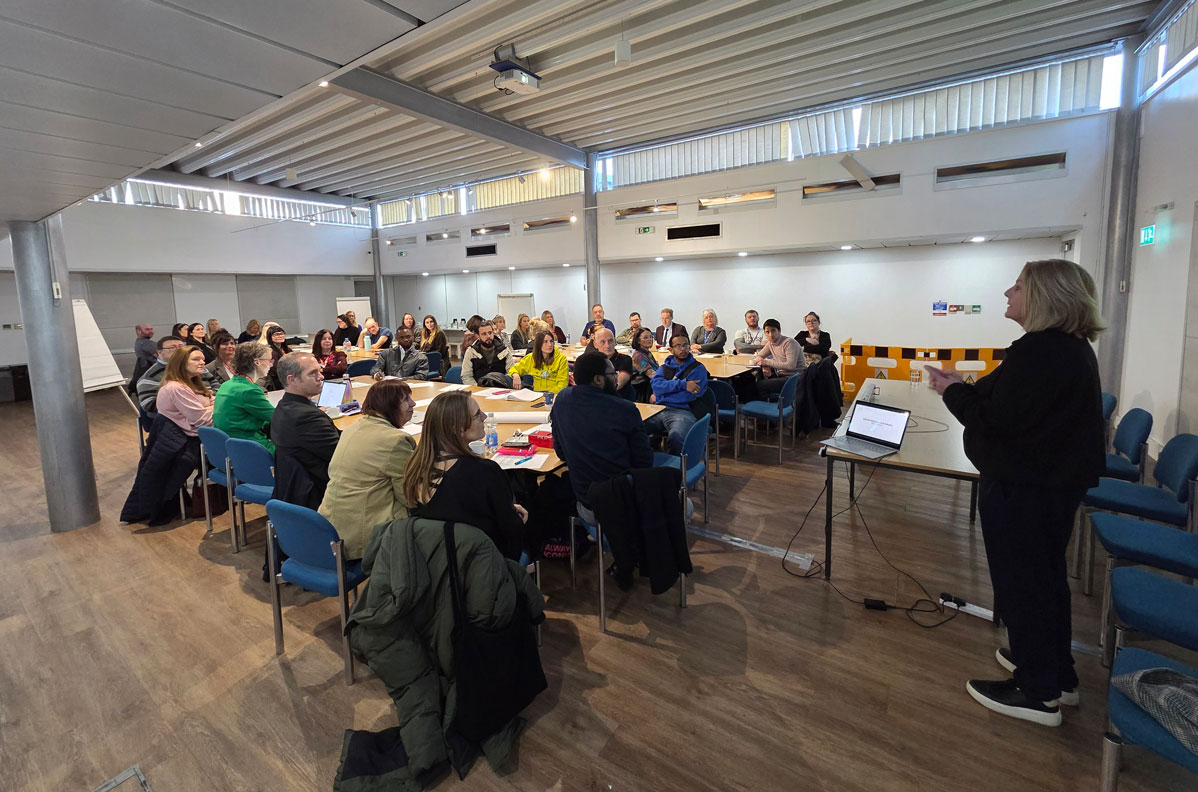
The workshop was framed as a collective response to one of the most visible expressions of inequality. Its aim was to develop a shared understanding of the drivers of rough sleeping, listen to the voices of those with lived experience, and identify practical actions that could improve outcomes in both the short and longer term.
The session was designed to bring together partners from across the statutory, voluntary, community, academic and criminal justice sectors. Participants included representatives from Voluntary, Community, Social and Faith Enterprises, health and care providers, housing and homelessness services, criminal justice and resettlement partners, academic institutions, regional programmes, and local authority departments and commissioning leads spanning public health, housing, adult social care, communities and hospital discharge.
The workshop combined formal presentations with interactive group sessions and a lived experience panel, ensuring insight was gathered from multiple perspectives. Key activities included data presentations, facilitated group discussions, expert contributions, personal testimonies and collaborative action planning. This structure enabled participants to hear the local picture, reflect on research and best practice, and test proposed actions against the experiences of people who had been directly affected by rough sleeping.
The workshop focused on three population groups identified as being disproportionately affected by rough sleeping in the borough:
- people with complex needs, including co-occurring mental health conditions, substance use, histories of trauma and chronic exclusion
- people experiencing relationship or family breakdown, including those affected by separation, bereavement and domestic abuse
- people leaving residential settings, such as prisons, hospitals, care or supported accommodation, often without a stable housing plan in place.
Group discussions throughout the workshop were structured around these three cohorts to ensure tailored understanding and responses.
What we heard
What people said
Participants described limited availability of accommodation that is suitable for people’s level of need and stage of recovery, with restricted move-on options and affordability pressures creating barriers to progressing towards more independent housing. Challenges were particularly evident at transition points, where support often falls away or becomes fragmented. Hospital discharge, the end of periods in residential settings or statutory support, and periods of relationship or family breakdown were all identified as points of increased vulnerability. For people leaving residential settings, this was described as a “cliff edge”, with limited preparation for independent living and a need for better coordination between services. The lived experience panel reinforced that rough sleeping is rarely driven by housing alone, but by a combination of trauma, relationship breakdown, unmet health needs, and abrupt transitions. Participants also described bottlenecks in accessing and navigating support, complex systems and inflexible thresholds were described as major barriers, particularly during periods of crisis.
What local research said
Liverpool John Moores University undertook an independent evaluation of the local Complex Cares approach between 2023 and 2025, which was presented at the workshop. The evaluation identified strong partnership working, shared ownership of a single cohort, and effective multi-agency coordination through panels and operational huddles. It demonstrated that the approach places individuals at the centre of planning and supports trauma-informed practice. The evaluation also identified significant pressures, including limited capacity across the system, rising demand particularly for mental health services, the lack of affordable housing, and challenges associated with hospital discharges that do not adequately connect people to housing and support. These findings highlight the need to sustain integrated, trauma-informed approaches while addressing structural gaps in housing and support, reinforcing the importance of treating rough sleeping as a whole-system and public health issue.
What good practice showed
The workshop also drew on learning from good practice in Manchester, including a person-centred, social-work-led approach that has significantly improved outcomes for people experiencing entrenched rough sleeping. Central to this model is a multi-agency “team-around-the-person” structure, where weekly homelessness partnership meetings bring together housing, health, social care, and other key partners to coordinate support and share responsibility for individuals. The team actively applies the Care Act to assess needs often missed in traditional outreach, increasing Care Act assessments from four per cent to 91 per cent in a year and triggering a significant rise in safeguarding actions. The case of ‘Richard’, a pseudonym, was shared to show how unmet needs linked to brain injury and trauma had contributed to addiction, homelessness and multiple failed placements. Through trauma-informed practice, consistent engagement, and use of tools like the executive-functioning wheel, the team secured specialist rehabilitation and long-term housing. Richard was eventually able to stabilise and reconnect with his family.
What we agreed
The workshop produced a set of jointly developed recommendations structured around six themes:
- Strengthening prevention and early intervention: Make prevention the default response across housing, health, social care and community services. Identify people at risk of homelessness earlier, particularly those experiencing relationship breakdown, deteriorating health or transitions from residential settings. Strengthen community-based prevention and third-sector involvement to reach people before crisis point.
- Delivering an integrated, person-centred response across housing, health and social care: Develop a more integrated response across housing, health and social care, with shared accountability for outcomes. Strengthen the local Complex Cares model, improve information sharing and joint decision-making, and embed person-centred, trauma-informed practice across services. Expand outreach provision and adopt a key worker approach.
- Building workforce capability and leadership: Increase skilled homelessness and rough sleeping social work capacity, alongside wider workforce development. Strengthen professional curiosity, trauma-informed practice, and confidence in applying statutory frameworks such as the Care Act.
- Expanding appropriate accommodation pathways and tenancy sustainment: Improve access to suitable accommodation by expanding specialist and psychologically informed accommodation, increasing one-bedroom provision, and ensuring gender-specific options are available. Strengthen tenancy sustainment through in-reach, floating and resettlement support.
- Enabling the system through flexible and fair commissioning: Develop more flexible and longer-term commissioning arrangements that enable services to work with complexity rather than exclude it. Align resources across partners, improve fund management, coordinate investment and reduce duplication.
- Reviewing legal, rights and system-navigation barriers: Improve service accessibility and navigation within existing legal frameworks. Provide identity and documentation support, improve clarity around eligibility and priority need, and resolve tensions between housing, care and immigration systems.
What changed
The workshop created shared evidence base and a jointly developed framework for action, helping partners move beyond individual organisational perspectives towards a collective understanding of rough sleeping as a whole-system and public health issue. It also strengthened the role of lived experience in local system planning, with people who had experienced rough sleeping contributing directly alongside practitioners, commissioners and strategic leads.
Feedback collated after the workshop indicated that most participants found the session very useful and valued the opportunity for collaborative, cross-sector discussion.
The findings and recommendations have since been shared through local governance routes, including the Health and Wellbeing Board and the Place Partnership Board, where their use by the Communities Department within the Place Services directorate to inform the council’s emerging Homelessness strategy was accepted and approved. This supports wider visibility and accountability and helps ensure future plans are grounded in local data, lived experience, research evidence, best practice and the priorities identified by partners across the system.
What other councils can learn
Complex issues such as rough sleeping require a shared understanding before shared action can be agreed. Bringing partners together around local data, lived experience, research evidence and examples of best practice helped create a common picture of the problem and a clearer basis for prioritising action.
A similar approach should involve strategic leaders, frontline practitioners, commissioners, voluntary and community sector partners, and people with lived experience. This helps ensure recommendations are grounded in both system-level understanding and practical realities.
Transition points such as hospital discharge, release from custody, leaving care or supported accommodation, and relationship or family breakdown should be a key focus. These are moments when people can fall through gaps in support, so strengthening planning and coordination at these points is essential to preventing rough sleeping.
Lived experience should remain central throughout the process. The panel reinforced that rough sleeping is rarely driven by housing alone, and that stigma, trauma, unmet health needs and difficult-to-navigate systems can all prevent people from accessing help at the point they need it most.
Contact
For further information please email [email protected]