Local Government Association

We are the national voice of local government, working with councils to support, promote and improve

Featured articles

Please select

HICM: Intermediate Care: Hertfordshire

Overview

Hertfordshire County Council had previously sought to embed a reablement ethos in care provision by placing occupational therapists (OTs) within generic teams, largely managed by social work qualified managers. This approach had delivered limited progress, and the expected benefits did not fully materialise. The Council therefore decided to take a new approach, creating a dedicated Enablement Team.

Action

Case Study

HICM: Intermediate Care: Leeds

Overview

The HomeFirst Programme was established in 2022 with the primary aim to improve outcomes for Leeds residents accessing intermediate care, to improve staff experience and to make better use of our collective resources.

Action

The programme was made up of 5 independent projects, all relying on strong working relationships across system partners, including third-sector organisations.


Case Study

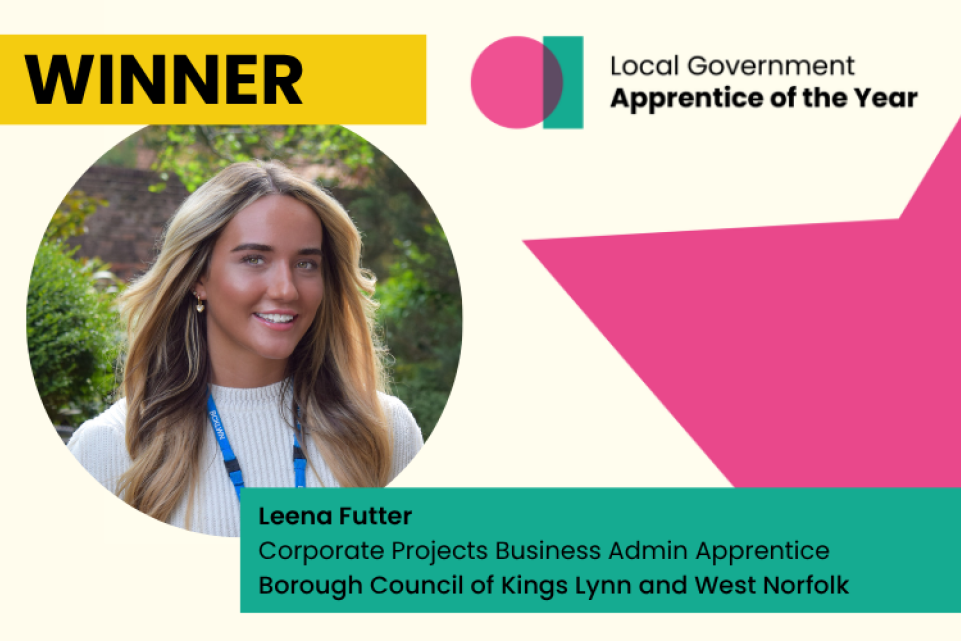
2026 Local Government Apprentice of the Year winner - Leena Futter

The 2026 Local Government Apprentice of the Year winner - Leena Futter - began her journey in local government in October 2022 as a casual Recreational Assistant. This led on to her first apprenticeship opportunity as a Leisure and Fitness Apprentice. In September 2025, Leena then took a bold step into her current role as a Corporate Project Administrator Apprentice at Borough Council of Kings Lynn and West Norfolk and is now undertaking her second apprenticeship, level 3 Business Administrator.

Case Study

View allWorkforce articles

Best use of digital technology

Assistive technology has an important role to play in supporting people living with dementia to stay safe and independent in their usual place of residence for as long as possible, and in pre-empting and avoiding crises that lead to escalation and hospital admission.

Effective communication

One of the most important factors cited by stakeholders in shaping the high impact change model is the need to improve communication at each stage of the person’s journey.

Best use of data

In assessing themselves against the high impact change model and defining the changes to be made, integrated care systems (ICSs) can define a clear list of the data to be collected and used to track and measure progress.

Skills, education, training and support

Increasing and maintaining the skills, awareness and understanding of dementia and delirium across the workforce should be a high priority for ICSs, to optimise the benefits of the high impact change model.