Walsall Council, in partnership with Walsall Manor Hospital's antenatal clinic, commissioned creative arts practitioners to engage pregnant women to explore attitudes to and encourage uptake of maternal vaccines.
Synopsis
Maternal vaccine uptake for influenza, pertussis and respiratory syncytial virus (RSV) is influenced by health inequalities, with lower coverage often seen in deprived and ethnically diverse communities. In Walsall, where maternal immunisation rates remain below the national average, the Flu Fairies programme has operated for the past 12 years within the antenatal unit at Walsall Manor Hospital. Using a creative arts approach, the initiative helps pregnant women explore concerns, access trusted information and make informed decisions about vaccination.
Background
Inception
The programme was established following two preventable infant deaths from pertussis in Walsall over a decade ago, highlighting the need to improve maternal vaccination uptake. As part of the development of an NHS Health in Pregnancy Service, Walsall Council and Walsall Healthcare NHS Trust commissioned the Flu Fairies programme to support increased awareness and engagement around maternal immunisation.
Continued relevance
Although Walsall uptake broadly follows national trends, vaccination coverage for flu and pertussis remains below the England average. Uptake of the newer maternal RSV vaccine has also been lower than anticipated locally. These challenges reinforce the need for targeted and innovative approaches to improve vaccine confidence and uptake among pregnant women.
Approach
In a relaxed, informal setting, creative arts practitioners dressed as Flu Fairies engage pregnant women, their families, and friends in a simple craft activity—creating a small Flu Fairy.
While crafting side-by side, practitioners initiate gentle, supportive conversations about maternal vaccinations, providing an opportunity to discuss questions, concerns, and individual perspectives in a non-judgemental environment.
Women take their fairy home as a positive reminder of the interaction and can also photograph their creation within a diorama, a themed display to keep as a memento or to post online and share positive vaccination messages with others. Information resources and signposting to trusted sources and local vaccination services are provided.
The initiative aims to:
- raise awareness of maternal vaccinations
- provide clear, evidence-based information
- explore attitudes, encourage questions in a non-judgmental
- environment and address concerns
- encourage informed decision-making through open conversation.
The Flu Fairies programme adopts a hearts and minds approach to public health engagement, using creativity, trust, and meaningful dialogue to promote vaccine confidence and uptake. By complementing the work of maternity staff, the project creates a welcoming space where women can engage with vaccination information at their own pace and comfort level.
The ANC (antenatal clinic) waiting room at The Manor provides an ideal location for us to talk and listen to pregnant women and their families’ views on the vaccinations offered during pregnancy. As fairies / artsworkers, and not medical staff, we’re there to support the fantastic work being done at the ANC and out in the community. We’d like to thank all the staff at the Manor ANC for their warm welcome, help and guidance in what is now the 12th year of this project.”
Alison Strain, Arts Worker for the Flu Fairies project
Impact
During the 2025–26 flu season, the programme delivered 15 clinic days and engaged 960 pregnant women through one-to-one conversations. This compares with 1,053 interactions over 17 clinic days in the previous year.
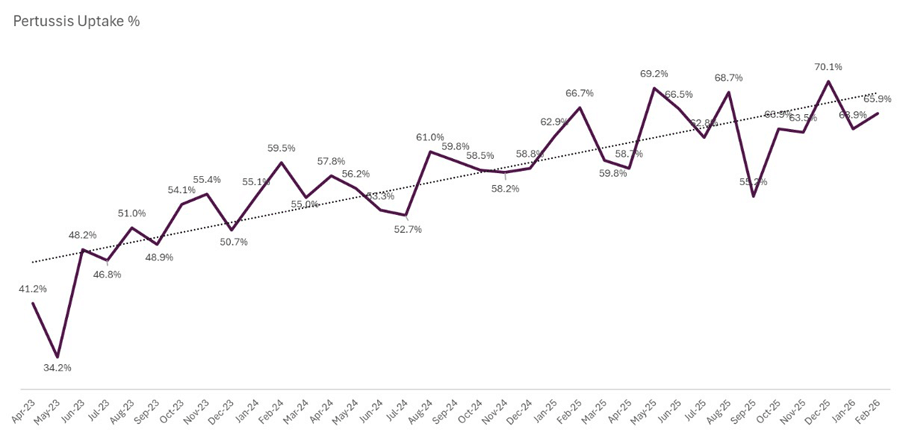
While the programme is not directly evaluated against vaccination uptake, local pertussis vaccination rates have shown a sustained increase, suggesting a positive contribution.
Insights gathered through these conversations also help identify barriers and facilitators to vaccination, informing NHS service improvements and future public health interventions.
Programme conception
The Flu Fairies programme is now a well-established and recognised feature of the antenatal clinic, with programme artwork prominently displayed, reinforcing its visibility and identity. It is embedded into routine practice and many women re-engaging during subsequent pregnancies. it is highly valued by maternity staff, who report increased awareness of maternal vaccinations and useful insights from participant feedback to inform service development.
I would personally like to thank the flu fairies for all their support and hard work within our maternity. Not only has this helped increase our rate of vaccinations the promotion and awareness have really increased. Our women talk year on year about the flu fairies and every year we welcome them back with welcome arms. The data we received is most useful to present in various forms and board reports."
Laura Parsons, Midwife Team Lead
Participant feedback has been overwhelmingly positive, with women highlighting the relaxed, informal setting and the opportunity for dedicated, distraction-free conversations.
Something like this is so good – just having the time to talk to women with no distractions."
This project is a really good thing. I’ve never seen anything like it before."
It’s really relaxing talking to you – when I’m with the doctor I find it hard to take in what they say."
The programme has also demonstrated an ability to influence decision-making, with some previously hesitant individuals choosing to receive vaccinations following engagement with the initiative.
Insights gained
Drivers of vaccination uptake
Key factors influencing uptake of vaccination, include clear, trusted advice from healthcare professionals, such as general practitioners and midwives. Encouragement from partners and family members, as well as positive experiences with vaccination in previous pregnancies can increase confidence and acceptance.
A heightened awareness of rising influenza cases in 2025-26 flu season and concerns regarding rises in pertussis cases were cited as considerations. Most importantly, the desire to protect the unborn baby is a primary motivating factor.
Barriers to uptake
Reported barriers included concerns about vaccine safety, preference for a natural pregnancy, uncertainty around newer vaccines such as RSV, anti-vaccination beliefs, and negative influences from partners or family members.
Key learning points
It is well documented that vaccine hesitancy is complex and influenced by multiple personal and social factors.
The programme reinforces that vaccine decisions are shaped by trust, relationships, and social influences as much as clinical information. Healthcare professionals remain key trusted sources of advice, while partners and family members can significantly influence decision-making.
The inclusion of family members in Flu Fairies conversations is therefore a particular strength of this programme. The findings also highlight the importance of timely communication and raising awareness of disease risk to support vaccine uptake.
Next steps
Creative arts provide a highly effective medium for amplifying public health messages. Since its inception, the Flu Fairies programme has expanded in scope and has been adopted by other local authorities across the Black Country. It represents a positive and transferable model that could be applied to a range of other health interventions.
Conclusion
The Flu Fairies programme demonstrates how local authorities can use creative arts, behavioural insights and partnership working to address complex public health challenges. The initiative combines health promotion, community engagement and public health intelligence gathering in a single intervention. Its longevity, strong stakeholder support and adoption across the Black Country suggest it offers a sustainable and scalable model for improving vaccine confidence and reducing health inequalities among pregnant women.
Authors
Authors: Elizabeth Lee, Health Protection Practitioner, Olabimpe Akingboye, Senior Health Protection Practitioner and Dr Uma Viswanathan, Consultant in Public Health
Contact email: [email protected]