This guide, produced for the Local Government Association (LGA), outlines definitions of mis/dis/malinformation and its impacts on communities and local authorities. It details responses and countermeasures and case studies from councils.
Background
This guide has been produced on behalf of the Local Government Association (LGA) following a workshop and interviews involving councils across England and Wales.
The first part of the document sets out definitions of mis/dis/malinformation and its effects on communities, local authorities and individuals. How to respond to such information and possible countermeasures are also covered in section one.
The second part of the guide includes case studies provided by councils and the learning that can be taken from these.
Introduction
The work of the LGA’s members is challenging, varied, and often highly complex. It is therefore difficult to produce a single guide to countering disinformation that can help all the different functions of local government.
This guide is designed to specifically support the work of communications officers, officers working in the PREVENT and counter-extremism space, and political officers. However, it acknowledges that these functions can have different resources, staffing levels, and face very different challenges. The guide is therefore designed to share best practice and support creative thinking to find solutions that fit unique circumstances. A version of this guide aimed at elected members is in production.
- Misinformation refers to verifiably false information that is shared without an intent to mislead.
- Disinformation refers to verifiably false information that is shared with an intent to deceive and mislead.
- Malinformation deliberately misleads by twisting the meaning of truthful information.
In this guide we have used the term disinformation to cover all three of the above.
Disinformation affects the ability of local government to deliver its vital services. It can, for example, mislead the public about the effects of vaccines, create rumours aimed at destabilising council meetings, spread false narratives designed to radicalise those with genuine grievances, or incite people to violence and criminal damage (as seen during the riots across the UK from 30 July to early August 2024).
Disinformation is something that all communications and public-facing staff working in local government should be aware of and have a basic understanding of how to combat. This document offers an overview of key issues and best practices and directs the reader to further resources. It is not a definitive guide, but rather a means of empowering officers as they consider specific issues and circumstances to be handled on a case-by-case basis.
It is important to recognise that the threat posed by disinformation is not confined to a single piece of false information, damaging as an individual example may be. Arguably the greatest threat posed by disinformation is the cumulative effect of successive examples that continually reinforce false narratives about a particular group in society, or cumulatively undermine faith in democratic institutions or processes.
Encountering disinformation
You will most likely first encounter disinformation as individual messages containing false or misleading information. They become concerning when it becomes clear that the messages are linked to broader narratives. Narratives are a form of storytelling that helps to explain and shape perceptions of an issue. They are stories that are designed to influence a target audience. If you see lots of messages on a topic, it is likely that you will be able to identify one or more of the narratives that they fit into or help to construct.
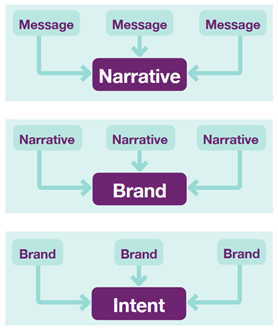
Narratives are in essence simple stories that give shortcuts to understanding complex issues. They often express things about identity, community, and purpose. They are often not literally true, but rather they carry the aggregated, distilled beliefs of a community built up over time by many people across many statements. This includes information about the values, identities and beliefs that drive these narratives, and with whom they have credibility. We call this the brand. A brand is what people think and feel about somebody or something, the characteristics and qualities that distinguish it from everything else. It is not about the person behind the account, but rather about the persona that the account attempts to project to resonate with certain target audiences.
Closely connected to the brand is the intent. Intent is notoriously difficult to determine. However, if you weigh up the kinds of brands that share problematic messages and narratives, a picture should begin to emerge. Often, the position of the account within its community – ie how its brand fits with the other brands it engages with – can help to reveal intent. Intent may vary quite widely even among those who produce the same kinds of messages, who adhere to similar narratives, and whose brand values overlap. Gaining a picture – sometimes called situational awareness – of what, who, how, and why disinformation is being spread is the first step to combatting it.
Adversarial actors tend to build audiences by linking their activities to trigger issues/narratives. These issues tend to be politically controversial and in tackling misinformation about them it is important to distinguish between legitimate political positions and illegitimate exploitation of controversy. The effect of misinformation, disinformation and malinformation is not only to increase controversy in a manner that attributes malice to one side in a debate, but to discredit legitimate support for the opposing side by tainting it by association with conspiracy theories, thereby turning disagreement into potentially bitter division. The technique of raising fear by spreading false or misleading content is perhaps the single most common denominator.
The Government Communication Service (GCS) has produced two counter-disinformation toolkits: RESIST 1 and 2.
- For more information on how to gain situational awareness, see RESIST 2, pages 10 to 16
- For an overview of common disinformation techniques, see RESIST 1, pages 21 to 25
Preparing for disinformation
There are several tools available to help you decide whether individual pieces of disinformation content require a response. These tools are designed to ask simple questions about the issue and how it relates to your work. You should, for example, consider the effects of the disinformation on your key business areas, such as your ability to do your job, the effects on specific segments of the public you serve, and potential risks to society. The matrix, set out below, may be tailored to answer questions specific to your priorities and needs.
| Our priorities | Key questions | |
|---|---|---|
| Objectives to protect | Policy areas and responsibilities | 1. Is the mis/dis/malinformation harmful to our priorities? In what ways? |
| Information to protect | Key messages and narratives |
2. What problematic communication techniques and behaviours have you identified? 3. What misleading or manipulated content is being spread? What are the main messages and narratives we should be aware of? What is untrue or misleading about them? |
| Brands to protect | Core values | 4. What values and interests do the accounts spreading mis or disinformation wish to project, and to which target groups? |
| Audiences to protect | Key stakeholders and audiences | 5. How widely is mis or disinformation spreading, and to which target groups? |
Other factors you should consider include the reach of the disinformation, for example whether it is likely to reach large audiences or remain a niche topic. It is also useful to conduct regular risk assessments so that you are clear about how disinformation can affect your priority policy areas, who the main influencers are, and who your key audiences will likely be. Together, weighing up these factors can help you to decide whether a response is proportionate and appropriate.
Some councils conduct annual risk assessments identifying eight to 10 known topics that are vulnerable to misinformation and disinformation. They do this by, for example, drawing on dialogue through community support officers to triangulate with other data sources. The resulting sentiment analysis is helpful for horizon scanning on new and emerging threats.
One council commissioned a report on the connections between serious organised crime and radicalisation. It showed that certain criminal activities can be a gateway to radicalisation. The report was made possible by meaningful community engagement, and the insights helped to design interventions at key steps in the radicalisation process.
One council decided to augment its regular reporting on crime levels with studies of community tensions. They found that this provided better indicators and a more in-touch basis for community engagement.
See RESIST 2, pages 17 to 32 for more on how to conduct risk assessments related to disinformation.
Responding to disinformation
Once you have decided to respond to the disinformation, it is worth considering the different tools at your disposal. While in many cases a straightforward rebuttal will suffice, some disinformation issues are more systemic and require different approaches. In some cases, more than one tool should be used as part of a coordinated effort. The main communicative tools worth considering include:
- Inoculation/prebunking: If you want to proactively counteract false messaging before it has become widely spread, you can attempt to strengthen the resilience of your audiences by warning them about disinformation they are likely to encounter.
- Debunking/fact checking: If you simply want to counteract the impact of the false information by asserting the truth, fact checking and debunking are widespread practices that perform an important role in ensuring that false information does not go unanswered. Remember that you might not be the most credible voice for debunking falsehoods.
- Awareness campaigns: If you want to proactively shape public debate about issues likely to be subjected to disinformation, you can use a campaign approach involving robust narratives and brands.
- Network building: If you know that an issue is likely to persist in the medium or long term, it is important to develop networks capable of shaping an effective response over time. Collaboration with community leaders, interest groups, journalists, and researchers can generate credibility with audiences.
- Counter-narrative: If you notice that false narratives develop into shorthand, or a delivery mechanism, for mis- and disinformation content, you may wish to tackle those narratives head on. Countering narratives involves exposing falsehoods and contradictions in the stories of how important issues are explained to different audiences and, where possible, replacing them with a truthful narrative.
- Counter-brand: If a persistently hostile actor spreads false claims, you may have political support to expose either the groups or interests spreading them. This involves explaining and projecting your identity and values, and exposing the negative behaviour and contradicting values of those who do harm.
- Resilience building: If you know that a disinformation issue requires long term efforts, you can create information programmes designed to increase the ability of target audiences to critically engage with false or manipulated information. Source criticism and media literacy are key tools for building public resilience.
In weighing up whether to act, it is important to consider not just the potential reach of the disinformation, but also the likely reach of any response.
In some cases, creating networks among local government representatives facing similar challenges can be considered a countermeasure. Things that are happening locally may in fact be connected to national, and even transnational coordinated efforts.
Community engagement is made much more difficult if the local government communications do not align with reality. There is a risk of alienating the public and undermining credibility and trust. Community level engagement is an important way to keep other forms of communication more realistic and credible.
Perceived silence from local government can contribute to an information void and lead to community irritation. This becomes harder when local government is reliant on information or clearance from other parts of government, particularly if their responses are slow or there is reluctance at the political level to be linked to certain issues.
See RESIST 2, pages 33 to 52 for more on strategic communication options.
Examples of effective countermeasures
Sharing responsibility
Disinformation targeting PREVENT referrals was being spread in a community, suggesting that referrals were being made against families that supported one specific country. Representatives of local government asked credible religious representatives to host a closed meeting where religious leaders would chair and invite attendees. They took responsibility for the conduct of the event. It was constructive and gave different parts of the community a voice. Following the event, the religious leaders published an open letter about the issue, which was considered constructive.
Building credible networks
A council had received criticism for how it had historically dealt with child sexual exploitation cases and survivors of abuse. To remedy this, the council funded and participated in a community group, created a charter, and worked closely with the community to improve the services available. The result was that survivors and community groups became active participants in debating about the issues and levels of support available.
Amplifying others
Following a publicised altercation between secondary school children, rumours began to circulate that the children of asylum seekers had attacked local children. However, the opposite was true. The police debunked those messages very quickly, and local government amplified those messages and appealed to the public to stop spreading misinformation. The approach gained wide reach and calmed community unease.
Providing accurate information
During the COVID-19 pandemic, it became clear that key messages about public health issues did not reach all communities. One local government office sent short messages about vaccinations to leaders of mosques, which would be read out on Fridays. The result was that credible voices would share important information to audiences that had previously been hard to reach.
Campaign approach
In one community, protesters livestreamed a two-hour demonstration outside a hotel that hosted asylum seekers. The council made a public appeal for calm, put a frequently asked questions (FAQ) resource on its website, and hosted a closed meeting with community representatives. The council also organised interventions in schools and offered support to victims of harassment. The approach helped to calm the public.
Swift reaction
Following the illumination of Christmas lights, posts were shared on X (formerly Twitter) suggesting that a council supported a polarising political issue by projecting partisan colours onto the Christmas tree. The council responded promptly by debunking the disinformation and sharing alternative images depicting the range of colours projected during the Christmas event.
Taking security measures
A disinformation campaign targeting staff and councillors began to cause serious disruptions in the work of a council. People identified as causing harm to property or harassing staff and councillors were issued temporary banning orders. This helped calm to tensions and allowed the work of the council to resume.
Improving coordination
Councillors became the target of continuous disinformation campaigns. The false claims were designed to radicalise young people and posed a security threat. The PREVENT team refined the structure of their internal network to foster a more unified voice and enable an effective response. Coordination centred on the creation of a secure online space for stakeholders to share information on current events, threat assessments, calendars, messages from senior officers as well as reports. This hub of information helped to build the team's confidence and coordination.
Trust and resilience-building in communities
Disinformation about a PREVENT team targeting specific social groups led to the loss of trust between the team and some members of the local community. The team organised critical thinking workshops to educate young people and their parents about disinformation. Attendees were shown samples of deep fake videos and misinformation about COVID-19, as well as techniques used by extreme right-wing groups and Islamist extremists. The goal was to teach the public how to identify fake information and think critically before sharing information. Critical thinking workshops have proven to be an effective means of staying connected with local communities, and face-to-face communication has contributed to overall trust-building.
Case studies
There are eight case studies in this section. The first seven describe generic disruptive events encountered by local authorities and the actions that were taken in response. They are based on interviews conducted with council communications and safety lead officers between November 2023 and January 2024.
For confidentiality purposes, these case studies have been anonymised. In some cases, multiple examples have been incapsulated into a single case study; the reader should not, therefore, assume that each case study took place in a single authority. The purpose of these case studies is to provide examples that illustrate real-life problems, and to provide inspiration in support of learning and sharing best practices.
The eighth case study is linked to the riots and unrest that happened across England and Northern Ireland from 30 July to early August 2024.
In addition to the case studies , you may find the following resources on misinformation around vaccines and the pandemic useful:
- Tackling vaccination misinformation with local government communications
- Applying behavioural insights to improve COVID-19 vaccination uptake: a guide for councils
- London Borough of Hounslow: Used the messenger principle to address vaccine misinformation
- COVID-19: Behavioural insights case studies
- Forget What You Think You Know about...the vaccination roll out
- Increasing uptake for vaccinations: maximising the role of councils
Case 1: Attacking elected officials and fuelling tensions around asylum seekers
Action
In February 2023, extreme right-wing political groups initiated their first informational attack on elected members of a council, by distributing leaflets to approximately 100 to 150 households living close to the area where asylum seekers were housed. The leaflets did not contain personal threats that could result in criminal charges, but they aimed to rally residents to act against their councillors. The safety and communication services of the council, along with the local police, determined that this action differed from previous campaigns as it personally attacked elected councillors and put them as risk of harm. The perception was that the campaign was different to the usual level of threat, and it had the potential to escalate.
Setting
The wave of discontent and confusion followed the arrival of asylum seekers settling in hotels and vacant military bases located on the outskirts of small English towns. Most local inhabitants, who were already experiencing economic grievances, were faced with a new problem regarding their communities. While extreme right-wing parties had been fuelling tensions against asylum seekers on their respective platforms, they had not been active on mainstream media channels.
Actors 1: Extreme right-wing groups and their motives
Extreme right-wing groups used their media channels across digital platforms to undermine local authorities and sow distrust among the local population. They responded to communities’ questions very rapidly, in an emotionally charged manner, before the local officials released their statements. They exploited existing grievances to escalate tensions and disseminate disinformation, fear, and hate.
Actors 2: Local authorities and their resources
Operating as separate authorities, the district councils and county council had their own distinct responsibilities, decision-making structures and different levels of engagement with local communities. These factors can slow down an agreed coordinated response to such campaigns and tensions. Each county or district council had its own community safety, legal, and communications teams, all of whom needed to reach a consensus on the final response. Additionally, the county and district councils were not always aligned politically.
Counteraction
Due to concerns about potential escalation of the campaign against individual councillors, those responsible for safety and security addressed the issue collectively across the councils. The staff sought to convince their elected councillors, that despite their absolute right to defend themselves, engaging in Twitter (now known as X) skirmishes with the extreme right-wing groups would only fuel further escalation. District councils decided to rebut the leaflets through official statements. It was a difficult decision because by debunking the leaflets they made the matter known to thousands of people, when the leaflets were only delivered to around 150 households. During the course of a week, community safety, legal, and communication services across the councils worked together to evaluate the campaign, advise the councillors against engagement, and release the debunking response.
Results
The disinformation campaign targeting elective officials subsided. However, it is unclear whether that was because of the counter-campaign or other external factors. The swift coordination between the numerous councils in response to this crisis can also be seen as a positive result.
Tips
- Deciding which voices should respond, which channels should be used, and which audiences targeted is challenging when there are multiple stakeholders with different interests. Identifying the minimum level of ‘common cause’ is therefore a key step in developing a satisfactory response.
- Establishing a model for cooperation was key. Consulting and collaborating with other councils and authorities helped the councils make sense of the event, distribute information as a single coordinated response, and build confidence in their actions.
- Questions that officers working on this response considered, included:
- How do the councils reach consensus despite the different political opinions of their respective elected officials?
- How to pick battles: when should a council respond to mis or disinformation and when should it be ignored?
- How to measure the impact of an intervention? What is considered a success, and which results can be attributed to the communication efforts?
- If there is no legal action that can be taken, what other actions can councils take?
Case 2: Spreading disinformation and garnering support of the local community
Action
In February 2023, a member of an extreme right-wing political group posing as a concerned citizen attended a town council meeting dedicated to issues around asylum seekers housed in the town centre hotel. Four-hundred residents at the meeting clapped in support of his overtly racist comments without realising his political affiliation. Prior to the meeting, the extreme right-wing group had begun monitoring and engaging in online discussions with locals who voiced their discontent regarding asylum seekers in their town. This fuelled fear and anger towards asylum seekers and local authorities. Additionally, the extreme right-wing group distributed leaflets in the community to garner support and spread their rhetoric. This campaign came to fruition at the town council meeting, where the group successfully drew together the narratives they had seeded online to influence the meeting. Consequently, the extreme right-wing group succeeded in exploiting existing negative sentiment, the lack of information and the absence of strong leadership. Local authorities also believed that the group had been recruiting young people in their communities at the local park.
Setting
The residents of the small English town were informed that their local hotel would be transformed into a temporary residence for asylum seekers. Bookings and weddings were cancelled, and several staff members were made redundant. No communication about the matter was put out by the Home Office, local businesses, or local authorities. While the town council was desperate to issue some kind of statement to calm tensions, it was reluctant to do so without the full support of the county council and police. Consequently, people in the community felt isolated and neglected. This was the second asylum seeker hotel in the town (and the first one with male-only residents). Economic hardship was likely to have factored into the general hostility towards the hotel residents.
Actor 1: Motives
The extreme right-wing group was known for campaigning against migration, exploiting fear that migrants were being prioritised over locals and raising safety concerns, specifically in relation to women and children. It is safe to assume that their motive was to exacerbate tensions and use them to garner political support and recruit new members.
Actor 2: Resources, county council, police and town council
The town council had a good grasp of the situation at the grassroots level. They did not have a communications team and felt that the matter needed to be addressed by larger authorities. While communication teams existed within the county council, it was not clear if they would address the matter. Additionally, the team did not have specific experience with combating dis- and misinformation. The police monitored the media, and town council members conducted media monitoring. However, their efforts were not coordinated at the time of the incident.
Counteraction
The town council, which sensed tensions in their community following the housing of asylum seekers, urged the county council and police to release a statement and engage in public communication. Consensus was not reached, and the decision was made not to issue public communications on the matter and to let the issue subside. Additionally, the county council decided to not attend the town meeting to address the issue of asylum seekers.
Result
Although the mis and disinformation campaigns were never officially addressed, the events led to a new coordinated structure across local authorities. A community cohesion forum was established, which included the town council, county council, police, and faith groups. The forum shares information and intelligence about community tensions and meets once every four to six weeks for discussions and decision-making. Problems are addressed both formally and informally at the local level. One such example involved a shoplifting incident where the retailer blamed asylum seekers. The matter was investigated, and the message was passed on from the police to the town council and to the retailers in the shopping centre that the suspect was not connected to the hotel. The news then spread via word-of-mouth. Local authorities were able to identify the misinformation that could fuel tensions and potentially be weaponised by extreme right-wing groups.
Tips
- Key to solving this problem, long-term, was the importance of raising awareness of something happening at the grassroots level that required more attention. The community cohesion forum created a single collective voice to contribute to public debate and debunk rumours with factually correct information.
- Sometimes, conversations on the ground, that nip rumours in the bud, are more effective than full-scale debunking campaigns.
- When an incident takes place, speculation is inevitable. Allowing an information vacuum is a gift to extremists who will fill it with disinformation.
Case 3: Extremist groups’ use of disinformation campaigns to radicalise young people and recruit new members
Action
Continuous disinformation campaigns by extreme right-wing and Islamist groups led to growing tensions within local communities, significantly affecting young people in the town. This toxic environment further fuelled incidents of knife violence, resulting in the deaths of several teenage boys. Over the years, the town was subjected to ongoing disinformation campaigns around a variety of issues, including vaccination and asylum seekers. This was combined with threats against elected councillors and propaganda from extreme right-wing and Islamist groups. It is challenging to pinpoint one specific campaign that can be directly attributed as the catalyst for the knife violence in schools. Rather, it was the ongoing stream of parallel campaigns that divided local communities by spreading fear and hateful narratives.
Setting
The town is ethnically and religiously diverse and has a lot of young people. In the recent past, the town experienced a sudden surge in asylum seekers, which contributed to hostile narratives targeting local migrant communities. Following a slow recovery after the COVID-19 pandemic, the town residents grappled with austerity, high unemployment rates, and soaring living costs. Settled communities, who have lived in the town for generations were reported to often feel neglected in favour of transient migrant groups. The above-average youth demographic attracted extremist groups seeking new recruits. Additionally, young people often used personal messaging apps, making it harder for authorities to monitor tensions and the spread of disinformation or malicious narratives. Furthermore, authorities reported a low media literacy level in the communities, which could have made them more susceptible to the influence of disinformation and radicalisation on social media.
Actor 1: Extremist groups and their motives
Both extreme right-wing and Islamist groups were present in the area. These groups attempted to bring global and national political conflicts to the local level. The groups were led by prominent influencers who were active on both mainstream and fringe social media platforms, spreading disinformation targeted at young people and men. Their motive was to divide communities and fuel hatred to gain new recruits and increase their political influence.
Actor 2: Town council and its resources
In response to radicalisation trends among some young people, PREVENT strategies in schools, to safeguard young people from abuse and exploitation, were implemented. The activity was monitored across authorities, by a team involving police, PREVENT staff, and the council. The team aimed to address issues of security and radicalisation. Team members met weekly and shared updates on their work and community monitoring.
Counteraction/results
While the council’s cohesion team monitored tensions and collaborated with residents, it lacked confidence in delivering communication campaigns to address the tensions it uncovered. There were no proactive communication campaigns targeting disinformation, but rather reactive communication in the form of official statements debunking myths. What often made communication challenging was a fear of appearing politically biased. Authorities continued to target schools and implement awareness and educational campaigns to prevent teens from getting radicalised and exploited by crime rings and extremists. However, they acknowledge that their efforts have been insufficient. More comprehensive actions would be necessary to address the shared identity of the residents, fostering resilience and nurturing a sense of belonging.
Tips
- Have conversations with your communities, do not let the informational void appear.
- Do not underestimate your communities. Communicating in a positive tone, that ignores obvious grievances does not work.
- Build trust with your communities so that they can share information with you if they feel the need.
- Engage communities and develop a collective approach to finding solutions to common problems.
- Encourage elected politicians to marginalise extremists on a cross-party basis.
Case 4: Extreme right-wing and anti-fascist protests exhausting the resources of local authorities
Action
Public outrage erupted following the sudden closure of the town's hotel to accommodate asylum seekers. Residents were infuriated by cancelled weddings, discontinued swimming lessons and the loss of hotel staff jobs. Residents demanded prioritisation of the needs of the local population. A street rally was soon hijacked by extreme right-wing groups and was countered by anti-fascist protests, which continued for weeks, providing a constant drain on the resources of the local police. Many residents stopped coming to the rallies once they became politicised. Extreme right-wing groups managed to fuel the protests by raising racist sentiments, linking to broader divisive political issues, and propagating the Great Replacement conspiracy theory. While counter-protests helped to debunk the myths of the extreme right-wing groups, some among the counter protestors expressed negative sentiments towards police and were involved in offences against police officers. The protests seemed to be fuelling each other. The council was concerned with public safety and the mounting pressure on the local police.
Setting
The incident occurred in an affluent area of a small town, catching its residents off-guard. Although the Home Office had alerted the council about the potential establishment of an asylum hotel two months earlier, the final decision was only communicated at the last moment. The incident happened shortly before Christmas, further emphasising a perceived lack of concern and consideration by government for local people and businesses.
Actors 1, 2 and 3: Residents, extreme right-wing, antifa groups and their motives
The initiators of the protests were town residents; however, their rallies were soon hijacked by external political actors. Extreme right-wing groups aimed to further fuel protests by aggravating racist and Islamophobic sentiments. Additionally, the extreme right-wing protests were supported online by extremist groups in other parts of the UK. The groups were believed to have had some kind of coordination, consulting one another, and sharing motivational posts online.
The counter-protesters were also believed to be supported by political groups from outside the town. Their aggression towards the police became a security concern and their presence created additional tensions. While residents continued to frequent the protests, it was unclear to what extent they were involved in organising them, because of the avid support of the political groups described above.
Actor 4: District council and authorities
There was effective coordination among various local authorities, including the district and county councils, the National Health Service (NHS), the police, fire and rescue services, and the organisation responsible for working with asylum seekers at the hotel. The police relied on the district council’s analysis of public sentiment. As many district and county council employees lived in the area and were part of the community, they could easily assess the situation on the ground. Local authorities held meetings on a weekly basis, where they discussed their communication strategy with a group of stakeholders.
Counteraction
The county and district councils decided to distance themselves in communication from the Home Office, to mitigate public outrage aimed at them that was not connected to their own decision-making powers. They issued a public statement presenting the situation and attempted to dispel myths surrounding the asylum seeker hotel, such as that it was allegedly housing ‘300 fighting-age men’. The statement, along with a set of frequently asked questions addressing concerns and rumours, was disseminated by local newspapers, and shared on social media by residents. The district council chose not to conduct an open question and answer session due to previous instances where such meetings were taken over by activists. The council also avoided making any statements that could somehow have been interpreted as political, so as not to exacerbate the process.
Result
The involvement of political groups transformed the initial protest into an ongoing confrontation between neo-Nazi and anti-fascist groups, which discouraged many residents from involvement. As a result, rallies became a recurrent event in the district, occasionally surging in activity motivated by online discussions or clashes with the police. The local tensions subsided following the release of a statement by local authorities. Most of the animosity shifted to online spaces, although the police retained a heightened presence in the area.
Lessons learned
- Even the most peaceful areas and valid issues can undergo dramatic change when facing coordinated efforts from motivated adversaries. In this case, genuine and mostly moderate concerns about an asylum hotel became a battleground for external activist groups engaged in direct confrontation between one another and police.
- Constructing a comprehensive intelligence picture is crucial, and this cannot be achieved without multi-agency meetings and coordination.
- Addressing the issue in a carefully worded statement helped.
Case 5: Addressing adversaries behind disinformation campaigns and building public resilience
Action
During the COVID lockdowns in 2020, a large two-tier local council experienced a rise in extreme right-wing activism, particularly in areas where asylum seekers were housed. As the number of refugees grew, a significant amount of hate speech and disinformation flooded online spaces. When a senior officer of the upper tier local council publicly addressed the issue and spoke about disinformation being a coordinated effort by extreme right-wing groups, he became the target of personal attacks. He received threats to his family and was compelled to take safety measures. Subsequently, tensions persisted, with spikes in the number of violent incidents in the area. In March 2021, a UK citizen living outside the county began posting hateful narratives about refugees and those who supported them, escalating to increasingly aggressive posts. However, assessing whether they posed a real-life security challenge proved difficult. In October 2022, the author of the messages carried out a terrorist attack. While mental illness was a likely factor, this person was also motivated by terrorist ideology.
Setting
Local media often reports on matters regarding asylum seekers in the county. COVID restrictions and tensions associated with the pandemic created a solid foundation for the frustrations of local communities in online spaces. Additionally, there were frustrations with the allocation of resources for foreign nationals while local citizens suffered economic hardships. The fact that asylum and migration had become an issue in national political discourse, and some incautious elements in that discourse, were exploited by extremists. The extremist narratives used a lot of patriotic symbolism that resonated with the local public.
Actor 1: Their motives
Extremist groups that carried out coordinated communication campaigns were seeking to take advantage of frustrations among some sections of the public. However, the public and individuals who participated in spreading malicious narratives were looking for an outlet for their anger and an expression of their opinions, rather than seeking to create new security challenges. One person, however, who carried out a terrorist attack, was motivated by extreme right-wing ideology but was believed to have acted alone.
Actor 2: Their resources
The county already had in place a sophisticated awareness network that operated beyond what is expected to be the norm. The team monitored mainstream and social media linked to open-source news outlets both inside and outside the county. However, they did not directly collaborate with the media to spread counter-narratives but rather used their internal networks and word-of-mouth resources. The team worked to build resilience, especially among young people, by educating them about the threats of disinformation and the importance of source criticism.
Counteraction
Instead of perceiving it solely as a communication challenge, the county's PREVENT team began to regard disinformation as a security threat. The team acknowledged that when contentious political issues created tensions in society, adversaries - most of whom were local extreme right-wing groups and political actors - consistently exploited those vulnerabilities. Recognising the purposeful use of information to promote their extremist agenda, such as hate narratives and conspiracy theories, the team devised their strategy.
The initial step involved refining the structure of an internal network to foster a more unified voice and enable an effective response. This network featured an internal website where information on current events, threat assessments, calendars, messages from chief officers, and various reports were shared, contributing to the team's confidence and coordination.
The second step involved external communication targeting local communities. The aim of the communication campaigns was twofold. Firstly, they intended to educate the public about mis- and disinformation, so that they would be able to recognise it. Secondly, they urged the public to act and report the cases they found threatening. This way, the PREVENT team aimed to build public confidence and resilience towards disinformation and include them as actors in the counterstrategies, rather than view them as vulnerabilities.
Following the terrorist attack, which was carried out by a person living outside the county, the team started monitoring social media on a larger, national level as many national news reports focused on their local area.
Results
The team continues to monitor the security situation in the county and improve the capabilities of its internal network. The team has acknowledged disinformation as a security challenge and has established a threshold that measures the threat level of actors engaging in disinformation activities. It continues to build resilience and confidence among its local communities, ensuring they know how to spot disinformation and when to report it. Additionally, due to the geographical vulnerabilities of the county, the PREVENT team began monitoring social media on a broader national scale.
Lessons learned
- Understand what is happening online in relation to your news stories. Sometimes local monitoring is not enough.
- Empower the public to participate in countermeasures.
Case 6: Rebuilding reputation and monitoring public sentiment after countering a protracted disinformation campaign
Action
A county council sought to introduce new policies regarding the development of a sustainable transport network. This initiative included measures such as implementing zero-emission zones, creating Low Traffic Neighbourhoods (LTNs), and installing traffic filters. As consultations on these initiatives began in August 2022, it became evident that public opinion was divided on the matter, with significant levels of opposition based on entirely legitimate concerns about the impact on car users, which have been a typical feature of discourse over traffic management schemes for many years. However, a relatively new feature in this case was the exploitation of that controversy by those seeking to promote conspiracy theories surrounding 20-minute-neighborhoods, spreading the term ‘climate lockdown,’ which in the aftermath of the pandemic, resonated with the public in a particularly negative way. False stories, about residents being prevented from leaving their neighbourhoods or fined for leaving their neighbourhoods too frequently, were also promoted.
The situation rapidly escalated after a county councillor gave an interview to a national newspaper in October 2022, where the concept of a 20-minute neighbourhood was erroneously conflated with the traffic filters proposals. The resulting article mixed true and false information and employed inflammatory language. This triggered a nationwide discussion, replete with narratives from extreme right-wing activists and conspiracy theorists.
Within three months, the story garnered national and international coverage, with ‘climate lockdowns’ being mentioned in the same breath as the 20-minute neighbourhood concept and the county. While not all objectors to the policy were promoting conspiracy theories, the temperature of protest was raised by these allegations. Protests against the changes saw death threats directed towards the council’s lead officer. Tensions persisted for at least six months, during which time the county council decided to pause all social media communication related to travel and traffic to alleviate the negative sentiments that could potentially harm other topics they were addressing.
Setting
In 2022, the public was still recovering from the pandemic and its detrimental impact on health, mental well-being, and economic stability. Many people were unhappy with the government's handling of the crisis, and their sentiments created fertile ground for anti-establishment movements and conspiracy theories. In fringe, extreme right-wing groups propaganda began to permeate, stating that the government was attempting to seize control of the population, confine them to their homes, and restrict their freedoms.
Actor 1: Motives
On one side, there was a general concern from the public about potential restrictions on mobility, as they were still recovering from the painful experience of pandemic lockdowns. On the other side, extreme right-wing activists and conspiracy theorists capitalised on this general concern to promote their agenda.
Actor 2: Resources
The county council’s Travel and Transport Authority was the principal unit responsible for the counter-campaign. In the aftermath of the interview, the county council was flooded with calls and inquiries from local, national, and international newspapers and members of the public. Threats from extremists were also received. Managing these issues became a full-time job, requiring significant resources for many months. The county’s Travel and Transport Authority worked in partnerships across several boards and groups, which met on a regular basis. Through shared resources and assets, they adopted a holistic approach to achieve common goals. While the primary responsibility lay with the transport authority, these partnerships ensured that decisions were made on common ground and were delivered effectively.
Counteraction
The aim of the transport authority was not to change everybody’s mind about the 20-minute neighbourhoods proposal, but to calm the tensions and rebuild the council’s reputation by debunking the lies and replacing them with the true story. The authority worked with partners, particularly the city council, to monitor public sentiment across various media and social media channels, countering claims and changing the narrative over time.
The council relied on the FACT model to counter disinformation, which consists of four steps:
- Find misinformation/disinformation through media/social media monitoring.
- Assess the risk of inaccurate or misleading narratives.
- Create content to counter the narrative.
- Target the content at the most relevant audiences.
The council focused primarily on local audiences and shifted away from Facebook, using hyper-local social media channels, such as Next Door. All transport-related communication was suspended on Facebook for three months to ease the tensions. The county invested in media training for its Cabinet and senior leadership team members and consulted with specialists focusing on disinformation.
The county continues to work to gather information and understanding about public sentiment, in relation to future reforms and campaigns. In the long run, the communication goal is to understand the public’s views and, where possible, introduce ideas about healthy lifestyle choices.
Results
The public outrage, following the interview in the national newspaper, lasted for approximately six months and left the county in distress. However, it managed to recover over time. The debunking campaign and the dissemination of positive narratives, through local sources in coordination with local media, helped the council convey its story and regain public trust. It took a year for the council to stop receiving calls or queries on the matter. The council continues to monitor public sentiment on social media and provide media training for its staff and councillors where required. The council recognises that its resources may be stretched if there is further backlash to green initiatives, so external support may be considered for a future campaign.
Lessons learned
- It is important that spokespeople for councils undergo media training to help ensure messages are clear and will not be misinterpreted.
- It is crucial to work in partnerships.
- It is very helpful to use a model/guide while responding to disinformation, the FACT model, for example.
Case 7: Disinformation targeting a PREVENT team, and critical thinking workshops as a counter-strategy
Action
Disinformation about a PREVENT Team included false information about the nature of their work. Some suggested that a person’s involvement with PREVENT could result in a criminal record, impacting employment. There were also claims that PREVENT engaged in community surveillance. These narratives were primarily disseminated by organised groups targeting Muslim communities and were exacerbated by the ongoing conflict in the Middle East.
One prominent accusation was that PREVENT teams targeted Muslim young people who expressed their opinions on the Israel-Palestine conflict. While it was true that the PREVENT team occasionally received referrals related to this conflict from teachers uncertain about the situation, they always followed a concrete threshold in their assessments.
Setting
The council is responsible for the safety of some of the city’s most popular locations for demonstrations, which occur frequently. In addition, the area hosts diverse communities whose representatives often publicly engage in debates. Both extreme right-wing and Islamist extremist groups are present, actively working to recruit young people as new members.
While the area has always been susceptible to disinformation narratives, the COVID-19 pandemic exacerbated the problem. The sheer volume of misinformation circulating online during the pandemic sowed mistrust in public health and government authorities. The focus of the false and divisive narratives shifted to the conflict in the Middle East. Complicating matters was a history of concern about PREVENT in the area, and, in particular, a perception that it had targeted certain communities more than others, providing a foundation for mistrust.
Actor 1: Their motives
Some non-governmental organisations (NGOs) defending the rights of Muslim communities raised concerns about PREVENT’s work. Although it is believed that their motive was to protect Muslim young people from unjust charges of hate crimes, some of their claims lacked supportive evidence.
Actor 2: Their resources
The PREVENT team of the city was focused on counter-extremism and only engaged with individuals who were at risk of radicalisation. They were a small team, which belonged to the community safety service of the council. There were boards and partnerships across various authorities, such as the police, hospitals, and schools, which discussed referral cases. The council had a communications department that collaborated with the PREVENT team on disinformation-related topics and assisted in debunking efforts. However, the PREVENT team found that the most effective communication strategy in countering disinformation was direct engagement with communities and target groups. This approach allowed them to address problems quickly, using less formal language to achieve results.
Counteraction
The PREVENT Team employed similar strategies as their accusers, engaging with local communities through WhatsApp groups and targeting concerned parents to offer critical thinking workshops. Their strategy was not to debunk every myth but rather to equip the population with tools to be more resilient in the face of disinformation.
Critical thinking workshops were organised online, aiming to spread counter-narratives and build resilience in local communities. Attendees were exposed to samples of deep fake videos and misinformation about COVID-19, extreme right-wing groups, and Islamist extremism. The goal was to teach the public how to identify fake information and cultivate better awareness before sharing information. The workshops also educated the public on the symbolism used by extremists and conspiracy theorists in their communication, along with the dangers associated with online gaming.
Later, the PREVENT team commissioned an external agency with more expertise in educating communities in critical thinking skills. Additionally, education officers conducted workshops and online safety lessons in schools.
Results
Critical thinking workshops have proven to be an effective means of staying connected with local communities, and face-to-face communication has contributed to overall trust-building. The PREVENT team recognised that ongoing disinformation surrounding their work was a persistent issue. However, they monitored trends and adapted their critical thinking workshops accordingly. The team aims to secure funding for additional workshops aimed at educating young people about the legal aspects of protests.
Lessons learned
- Disinformation spreads quickly and can be very damaging, but you must equip people with tools to deal with it.
- The PREVENT team employed similar strategies as their accusers, engaging with local communities through WhatsApp groups and targeting concerned parents to offer critical thinking workshops. The aim was to equip people with tools to be more resilient and vigilant.
- Chat groups and face-to-face meetings can be effective methods of communication with key stakeholders
- It is impossible to debunk every myth, but it is possible to educate your community and make it more resilient towards disinformation.
Case 8: Riots triggered by false narratives
Action
Following the fatal stabbing of three girls (aged six, seven and nine) at a dance class in Southport on 29 July 2024, false narratives linked to the attack triggered a series of riots across the UK. These riots, the most intense since the 2011 London riots, took place between 30 July and early August 2024. The initial unrest in Southport left shops looted, cars destroyed and a mosque vandalised. Violent protest quickly spread to other towns and cities, including Birmingham, Liverpool, London, Manchester and Sunderland with clashes between rioters, police and counter-protesters. This led to many injuries and hundreds of arrests as well as damage and destruction of buildings and property.
Setting
In the aftermath of the fatal stabbings, the 17-year-old alleged attacker was apprehended quickly but his identify was not disclosed initially. On social media, disinformation, with false claims about the suspect’s identity, nationality and religion began circulating. High-profile extreme right figures amplified these false narratives, alleging that the suspect was a Muslim asylum seeker. The suspect was, in fact, a British citizen born to Rwandan parents in Cardiff, who then moved to the Southport area. These false claims need to be seen in the context of years of extremist promotion of racist narratives about asylum seekers and/or Muslims.
Actors 1: Individuals, extreme right-wing groups, fake news sites and foreign powers
The origins of the false claims and how they spread on social media are still being explored. Lynn Communications Agency runs a Misinformation Cell and, according to a briefing note produced by the agency in August 2024, it would seem an individual began the false narrative claiming the Southport killer was a migrant. This was then shared by another individual, with a large following, who first used a fake name for the suspect. These ‘Tweets’ from X (formerly Twitter) were leveraged by a fake news site Channel3Now to share the false story with a false name, ethnicity and history. This account brought the false narrative into the mainstream and, with the help of several high-profile influencers (who are known to share disinformation), this story started to take over social media. It was shared by members of the public who believed the sources to be credible. The story spread on X and TikTok, leading to hundreds of thousands of views before government, councils and other organisations could get a handle on it to fact check and debunk the claims.
Lynn Global agency mentions in the briefing note that UK government and some experts believe that foreign actors, linked to overseas powers, may have played a role in spreading disinformation that fuelled the riots.
One thing that is clear from the posts is that many use common tropes and hashtags to express anti-immigrant sentiment and racist conspiracy theories. Academics who are considering what was driving the rioters to the streets have identified carefully crafted content to suit an agenda but have also noted that many rioters have no understanding of the issues that they claim to be rioting about.
It is important to note that tens of thousands of members of the British public turned up in person and/or posted online to protest against the rioters and racism.
Actors 2: Councils, police, businesses and community organisations
The riots (and fear of riots) affected large areas of the UK. Councils worked closely with police and other organisations (as is always the case during major incidents that affect their communities) with the aim of protecting their employees, residents, businesses and visitors. Some front-line services were cancelled or modified for a short time to protect staff and residents (bin collections for example); events scheduled for peak summer season were cancelled in many areas too. There were some excellent examples of local authorities and organisations supporting each other. The Liverpool City Region, which includes Southport (within Sefton Borough Council) where the fatal stabbings and first riots took place in July, is one of these areas of the country. Liverpool City Council has shared with the LGA some of the tactics they applied and the lessons they learned in the aftermath of the riots.
With thanks to Camilla Mankabady, Director of Communications, and Mike Doran, External Relations Manager, both at Liverpool City Council, for the following insights:
Lesson one – offer support
The incident may not technically be in your patch, but nowadays that is often irrelevant. If you are seen as the main place in the region/area, then expect your phone to ring and expect to offer support to colleagues.
Lesson two – be collegiate
If you are in the global spotlight, then how can you amplify/change the course of the narrative? What is good for your colleagues in the sector is also good for your organisation and your narrative.
Lesson three – set the tone
You are not in control of the events, but you can call them out, set the tone and encourage other stakeholders to use the same language, choreograph the comments and reaction.
Lesson four – stay vigilant
When events are moving fast, then bolster your team, this narrative could go either way. Expect the unexpected, because that is usually what happens.
Lesson five – express emotion
Express vulnerability, discuss the impact (Liverpool City Council captured this in their communications with videos and comments). This is where your colleagues who are not professional communicators will come into their own.
Lesson six – find the light
How do you move the mood? Make your residents and stakeholders less fearful, less anxious. Appeal to the goodness in people, it shows the benevolent side of organisations and leadership.
Lesson seven – the power of three
Be structured in your thinking, what is it you are trying to achieve? In Liverpool City Council’s case it was response, recovery and renewal.
Lesson eight – involve external and internal voices
Include representatives and voices from across the council and your community to ensure your message is authentic, engaging and reaches all audiences. Faith and community leaders, partners and residents may be the best people to communicate particular messages, rather than the usual council spokespeople.
Lesson nine – be bold
Be bold and creative; great writing, eye-catching images and graphics and unusual approaches to content can cut-through and make an impression.
Lesson 10 – you can’t control social media
Myths spread too quickly to control, so do not worry about what you cannot manage. Rumours ran amok in the days after the attacks. Stakeholder engagement become vital to reassurance messaging.
Lesson 11 – knowing your communities pays dividends
Focus on your narrative. You know your council area and its people. Tackle the negative narrative through their voice, using representatives from the community to tell a positive and authentic story.
Lesson 12 – your content can work for the media too
Video is king. Councils may be able to record interviews at the scene from immediate response to the recovery and chronicle the journey. The media may not always be able to attend so the content can be used by you and shared more widely.
Lesson 13 – social listening works, use it to your advantage and to manage responses
GoFundMe and #ReadingNotRioting appeals were organic responses to the fire at a library in the Liverpool City Region. The council’s communications team saw these appeals take off and engaged with them and helped to amplify their reach and affect.
Lesson 14 – plan next steps
The freefall of events stops, and you must be prepared to plot your discourse over the weeks and months to come.
Case 9: How an education charity responded to targeted misinformation campaigns to protect its reputation
Action
Solutions Not Sides is a UK-based educational charity that delivers workshops on Israel-Palestine in British secondary schools. The charity helps pupils develop the skills to think critically about the conflict through workshops that promote open dialogue, empathy, and active citizenship. The central part of the sessions is giving young people the chance to hear directly from Palestinian and Israeli peacebuilders. Students are encouraged to engage critically, ask difficult questions, and consider a range of perspectives and possible solutions.
The charity has been subjected to multiple misinformation campaigns and public scrutiny from groups with opposing views of the conflict. Accusations of bias – including claims circulated via social media and private messaging apps – created reputational risks and led some schools to withdraw from the programme.
Solutions Not Sides is founded on core values of non-violence, equality for all and the rejection of hate, all of which are embedded in its governing documents. The charity’s staff and trustees actively oppose antisemitism, Islamophobia, and all forms of racism, and work to promote social cohesion within communities.
Setting
The charity delivers its programme to over 10,000 pupils annually and has built strong relationships with schools across the country, with many repeat visits. However, rising tensions in the Middle East increased the risk of the organisation being misrepresented or criticised.
In several cases, schools were contacted by campaigners who questioned the organisation’s neutrality. This sometimes took the form of local petitions, protests, or pressure on school leadership teams via parents, often using WhatsApp groups to organise. Some of these attacks targeted the charity’s staff directly, creating a welfare challenge for the organisation.
Actors and resources
The organisation found itself caught between accusations from both pro-Israeli and pro-Palestinian perspectives, with narratives often amplified online. The private and viral nature of messaging platforms made these accusations difficult to monitor or counter.
In response, the organisation worked with its board, advisors, and community leaders to carefully navigate the challenges. The organisation took a measured approach focused on de-escalation, addressing misinformation, and strengthening relationships with both Muslim and Jewish communities.
The charity leant on its pre-existing relationships to seek guidance on how to navigate challenges and as an opportunity to learn and grow as an organisation. It also mapped where it needed to work on its stakeholder engagement and set about a proactive approach including boosting its reputation on social media, in the press and with community groups.
Staff who were personally targeted were supported with strategies to reduce their exposure and rebuild their reputations. All colleagues at the charity have access to free mental health support.
Counteraction
The organisation took a more structured approach to communication following the attacks. It updated its website and developed new materials to support school leaders and parents in understanding its aims and values. A templated letter was offered to help headteachers explain the programme to their school communities.
It adapted its external-facing communications to pre-empt some of the attack lines, sharing information about its core values to get ahead of misinformation.
Crucially, it focused on deepening relationships with school leaders and local figures who could act as trusted intermediaries. For example, in one area, a councillor brought together local residents and the charity for an open conversation. Although not all attendees changed their minds, many felt reassured about the programme’s approach and intent.
Results
Despite the challenges, most schools continued to deliver the programme and shared positive feedback. A small number chose to withdraw – typically due to concerns about potential backlash rather than any issue with the content itself. Others not only continued but, in some cases, expanded their engagement with the charity.
This was often supported by clear communication from SNS and the backing of trusted local figures, including councillors, governors, and community leaders. The experience highlighted the value of strong, long-term relationships with schools and communities, and the need for early, open engagement to build and maintain trust around sensitive topics.
Tips
- Invest early in relationships with communities. The strength of pre-existing relationships – particularly with headteachers, governors, councillors and community leaders – played a crucial role in determining whether schools continued with the programme when pressure arose.
- Equip school leaders with clear, shareable materials. Proactive communication tools such as template letters, FAQs and briefing notes helped school staff feel more confident in explaining the programme and responding to concerns.
- Respond carefully to misinformation. Not every claim warrants a direct rebuttal. In this case, maintaining a calm, consistent message and focusing on reinforcing trust proved more effective than amplifying false narratives.
- Strengthen internal resilience. Staff who were targeted benefited from practical advice to reduce their exposure and rebuild their reputations, alongside access to mental health support. Having these processes in place in advance is critical.
- Use trusted messengers. Local councillors, community figures, and school leaders often proved more effective than the charity itself in explaining the value and neutrality of the programme to concerned communities.
- Avoid information vacuums. Where silence was perceived, misinformation often filled the gap. Establishing early lines of communication with schools and local stakeholders can help prevent confusion before it takes hold.
- Tailor your approach to different audiences. WhatsApp, email newsletters, parent letters, and in-person briefings may all play a role. One-size-fits-all communications rarely cut through during tense moments.
Resources
SNS: Frequently Asked Questions