Local Government Association

We are the national voice of local government, working with councils to support, promote and improve

Featured articles

Please select

School teachers' pay 2026/27 and 2027/28

This page brings together all the information you will need in relation to school teachers’ pay in 2026/27, 27/28 and 28/29. The LGA provides the secretariat for NEOST (National Employers Organisation for School Teachers).

HICM: Intermediate Care: Croydon

Overview

In 2017, Croydon Council, the local NHS Commissioning body, local health providers and voluntary organisations formed the One Croydon Alliance. They signed a legally binding 10 year agreement to work as one system, with shared goals and shared responsibility for local people’s wellbeing. The Alliance began by focusing on residents aged 65+, aiming to reduce avoidable hospital admissions, and help older people remain independent for as long as possible.

To guide the work, the partners committed to principles such as:

Case Study

HICM: Intermediate Care: Halton

Overview

Prior to the COVID-19 pandemic, Halton’s intermediate care provision was delivered through several separate services. These included the Rapid Access Rehabilitation Service, a Capacity and Demand Team, falls prevention team, hospital discharge teams and a Frailty team. While each service provided valuable support, they operated largely independently.

Case Study

HICM: Intermediate Care: Stoke and Staffordshire

Overview

Demand pressures and increasing costs were putting strain on the system, making it difficult to maintain service quality and meet the needs of service users efficiently. There was recognition that no single partner could deliver systemic improvement alone; effective collaboration across Stoke-on-Trent City Council, Staffordshire County Council and Midlands Partnership Foundation was essential for meaningful change. 

Action

Case Study

HICM: Intermediate Care: South Tyneside

Overview

The ‘Guiding You Home’ programme was established in 2025 as a collaboration between South Tyneside Council, Sunderland City Council, South Tyneside and Sunderland NHS Foundation Trust; and North East and North Cumbria ICB. 
The programme sees multi-agency teams working collaboratively with ward staff, care homes and home-based care services to find more effective ways of working – with the focus on helping patients get discharged faster, or stay out of hospital altogether, with more help provided at home.  

Action

Case Study

A stronger place

‘Place-branding’, ‘place-building’, ‘place-leadership’, ‘place-based approaches’. These are terms you will probably have heard before, and will certainly hear again. The terminology crops up so often because within it lies the potential to achieve the goals that public service drives towards.

Go digital

Digital can reach a far greater audience. Social media is great way of gauging people’s views, responding to enquiries and letting your community know what you are up to.

Beyond the usual suspects

Done badly, consultation and engagement can fall into the trap of disproportionately involving those who are keenly motivated or find it easy to engage.

Understand your local area

The role of representing or serving a group of several thousand local people is complex because of the patterns of change in social and political life in recent decades.

You're not alone

As this refresh and previous versions of New Conversations guides show, the context within which local authorities have to carry out community engagement is always changing. As such, we want to see this as a dynamic and evolving guide to make sure you are supported to meet the needs of your communities.

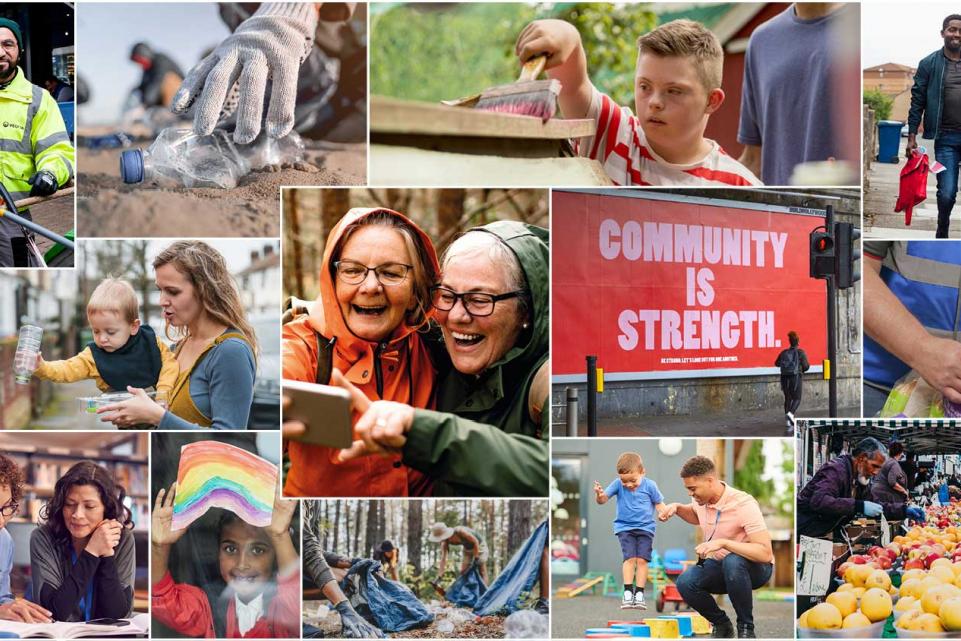
Building stronger communities

As well as direct relationships between councils and the community, high levels of trust can also benefit relations between different groups within the community.

Reaching out

When engaging the public, local authorities want to hear from residents who reflect the full perspectives, knowledge and identities of their communities.