The review was commissioned to support WMCA’s aim to deliver better quality housing for disabled people with the goal of reducing health inequalities in the region, as part of its wellbeing delivery priorities.
Synopsis
Habinteg and CAE were commissioned by the WMCA to research and produce The Accessible Housing Review for the West Midlands Combined Authority report, which was submitted to the WMCA in April 2024.
The review was commissioned to support WMCA’s aim to deliver better quality housing for disabled people with the goal of reducing health inequalities in the region, as part of its wellbeing delivery priorities.
The report was co-authored by Habinteg’s Director of Social Impact and External Affairs, Christina McGill, and CAE’s Head of Business Development, Fara Muneer. It has fed into WMCA’s Making the West Midlands an Exemplary Region for Disabled People 2024 report, which was published in April 2025.
The challenge
In late 2023, Habinteg and CAE began creating a detailed review of the accessible housing offer across the region to inform WMCA’s Inclusive Growth Agenda. At the core of the agenda is the Inclusive Growth Framework, which shifts success metrics away from purely transactional outputs (like Gross Domestic Product) toward social and environmental wellbeing.
WMCA needed to understand the current position on: the housing offer in its region; the region’s likely supply and demand for accessible homes; and the effectiveness of the services associated with meeting that demand across its area.
The solution
Habinteg and CAE worked closely with WMCA to analyse:
- the accessible housing offer across the seven WMCA member local authority areas
- current and projected demand for accessible homes
- the efficacy of housing services and support systems.
The report aimed to make the case for embedding inclusion and accessibility more deeply into WMCA’s housing strategy, helping to close the gap in health and housing inequalities across the region.
The impact
The review’s findings are now shaping future strategy for WMCA, setting a blueprint for a more inclusive housing landscape. The recommendations within the resulting report, The Accessible Housing Review for the West Midlands Combined Authority, ensure WMCA can make a tangible positive difference to the housing opportunities of its disabled and older residents in both the short and longer term.
The Accessible Housing Review’s key recommendations include:
- Proposals for how to leverage WMCA’s grant funding powers to increase the proportion of accessible homes.
- A call to establish a regional housing accessibility audit, using a consistent dataset across all local authorities.
- A proposed innovation project to develop a regionally adaptable ‘accessible retrofit’ model.
WMCA has demonstrated its commitment to reducing inequalities for disabled people by creating a dedicated Disability Inclusion Manager post which will lead the Exemplary Region’s ambition and influence the region’s accessible housing work.
The manager oversees the changes across housing, transport, employment and skills, health, social care and wellbeing and growth.
“The Accessible Housing Review has generated conversations across the housing landscape, creating much more informed conversations than previously were had. This work aligns with the Mayor of the West Midlands’ priority of Homes for Everyone and will help shape future accessible homes in the region. I really hope this can be the start of a wonderful collaboration to explore how we can reduce inequalities for disabled people. I firmly believe that housing has a significant part to play in that and really value support from experts such as CAE and the members of the group.”
Dr. Mark Fosbrook
WMCA’s Disability Inclusion Manager
From a planning perspective, a key development is that the Accessible Housing Review is now part of WMCA’s Housing and Economic Needs and Land Assessment. This provides a central evidence base informing the WMCA’s Spatial Development Strategy. As a result, the review’s findings are likely to influence strategic housing supply policies, including affordable housing and the needs of specific groups. These requirements also need to be reflected through Local Plans and, ultimately, delivery on the ground.
How is the new approach being sustained?
The emphasis is now on embedding inclusive and accessible design across policy, strategy and programme activity, rather than treating accessible housing as a standalone or specialist issue. This has included influencing how evidence is commissioned and interpreted; how priorities are framed across teams; and how accessibility and inclusion are built into decision-making earlier and more consistently.
Accessible housing is increasingly positioned as part of a wider system change agenda within WCMA, shaping expectations, governance processes and delivery pathways. This demonstrates impact at the level of structures, processes and culture, rather than only the production of a single report or output.
WMCA continues to explore how it will maintain this momentum and potentially influence future Continuous Market Engagement (CME) activity linked to Homes England, or any future devolved social and affordable homes programmes. It will use this work to help gauge or stimulate wider developer interest in accessible housing, supporting longer-term market change alongside policy and programme influence.
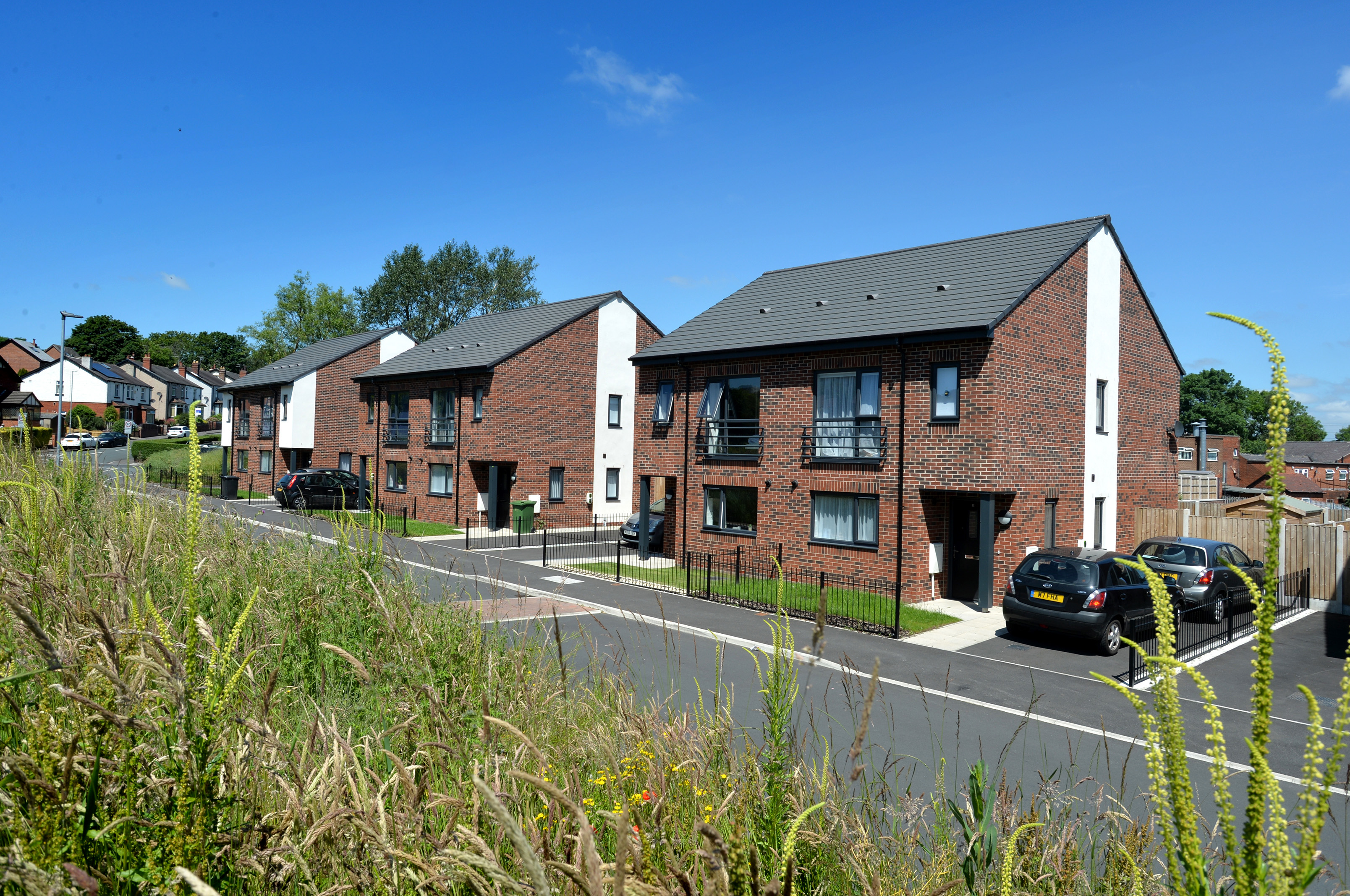
An example of semi-detached accessible housing at another scheme.
Lesson learned
- Data-driven solutions are essential as long as the data is both quantitative and qualitative.
- Facts and figures can only tell us so much and can be interpreted in many ways.
- The real-life voices of disabled people within the qualitative data bring it to life and create a powerful narrative and adds greater authenticity to any developed solution.
Contact
- Fara Muneer, Head of Business Development at CAE
- Christina McGill, Executive Director of Influencing and Communications at Habinteg